
Korean Lifestyle Brands: How Do You Find a Global Audience for a Niche Product?
A practical guide for Korean lifestyle brands: find a useful niche, test creator-led stories and connect global discovery with a product people can actually buy.
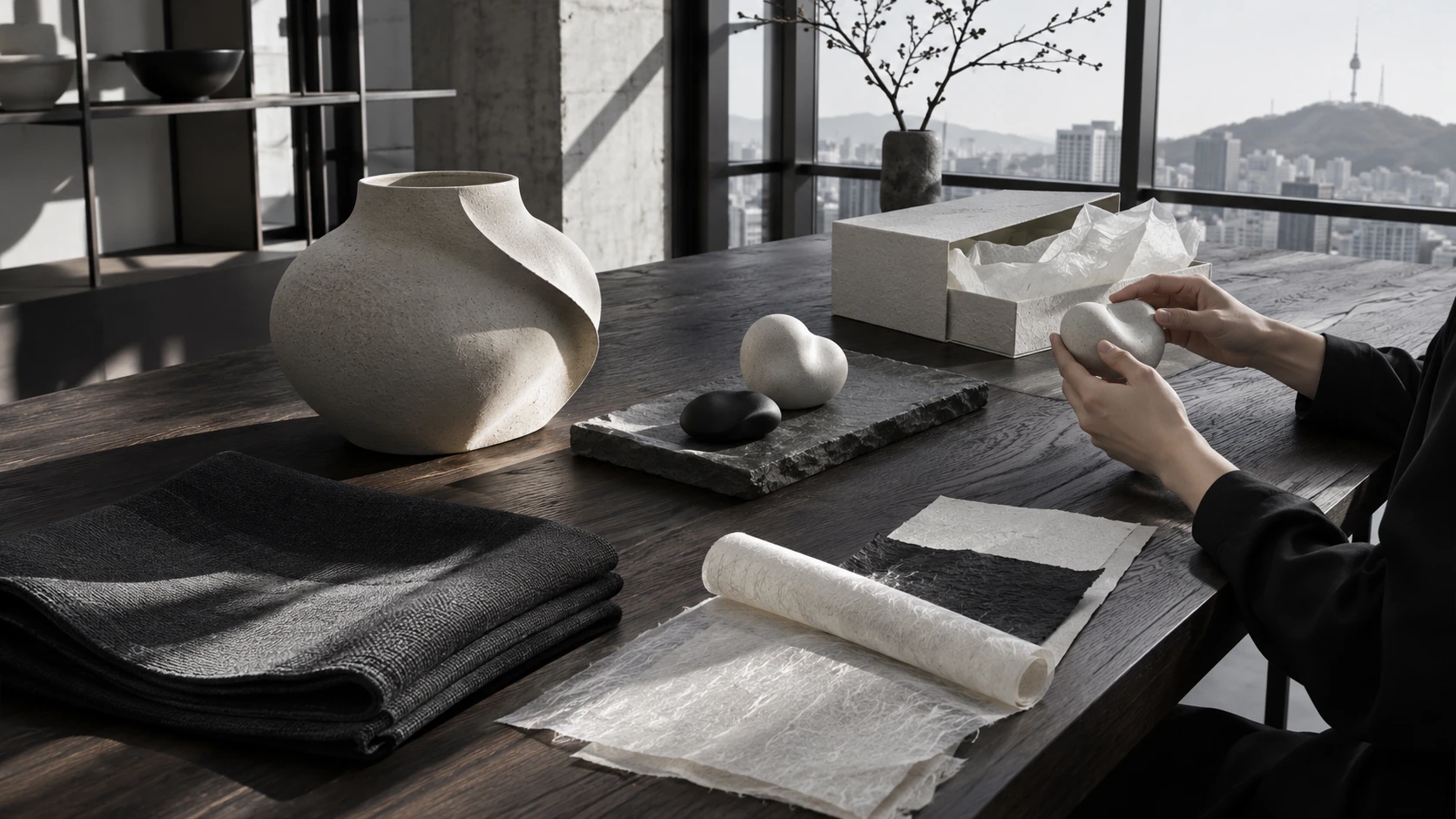
Choose an occasion before choosing a country
“People who love Korean culture” is a starting observation, not a usable audience brief. Someone decorating a work desk, choosing a meaningful housewarming gift and collecting a character series can all appreciate Korean design for different reasons. Your first task is to name the decision your product helps them make. Write a sentence containing the person, moment, alternative and reason to choose you. If that sentence could describe hundreds of unrelated products, narrow it again.
Then examine the buying situation in a candidate market. Can the customer understand the dimensions, pay in a familiar way and receive the item at an acceptable total cost? A beautifully designed object can attract international attention while remaining impractical to purchase. Separate markets where you can transact now from markets where you are only collecting interest. This distinction keeps early creator campaigns honest and makes inquiry forms more useful.
From a niche object to a useful market test
A campaign is ready when the same customer can recognize the need, understand the object and take the next step.
Use Korean identity as evidence, not decoration
A Korean origin story becomes useful when it explains a design decision. Show why a vessel has a particular rim, how a garment moves or why a character expresses a recognizable everyday feeling. Translate unfamiliar terms where they appear instead of assuming that viewers know the reference. Keep the object’s function visible. A campaign that requires a long cultural explanation before the benefit appears asks too much of a first-time customer.
There are current business signals worth watching without treating them as proof that every niche will succeed. KOCCA’s July 2026 character fair report describes IP applications across industries. Design Korea 2026 presents design as a meeting point for companies, designers and buyers. Our inference is that a lifestyle brand can build several commercial connections around a clear product story. The campaign still needs its own evidence of audience interest.
Match the proof to the product category
A useful product campaign removes a particular uncertainty. The character collector wants to understand the personality and collection logic. The fashion customer wants fit, movement and styling context. The homeware customer needs scale, texture and care information. The desk-product customer may need a single clear demonstration. Asking every category to use the same unboxing script hides these differences and produces interchangeable content.
Use a compact evidence library before commissioning a large production. Gather true-to-scale photographs, material notes, realistic usage footage and answers to the questions your team already receives. Creators can bring an interpretation and a relevant setting, but they should not have to invent basic specifications. A shared evidence library also gives your English and Korean pages consistent information while allowing each language to sound natural.
| Category | First uncertainty to resolve | Useful evidence |
|---|---|---|
| Character goods | Why this character matters | A short recurring story and collection view |
| Independent fashion | How it fits and moves | Measurements plus a styling sequence |
| Design homeware | How it feels and belongs in a room | Close details, scale and care |
| Tech toys and desk goods | What actually happens when used | A continuous demonstration |
Run a small story test with a usable buying path
Create three genuinely different concepts around the same product: a problem-and-use demonstration, a personal taste story and a gift or occasion story. Keep the destination page and availability consistent so the creative difference is easier to interpret. Choose creators whose audience habits fit the occasion, not simply creators with a Korean identity. An overseas ceramics enthusiast may explain a homeware object more effectively than a broad entertainment account.
Give each concept its own trackable link and keep a simple record of the dates, market, creator, spend and deliverables. Read the comments for unanswered questions, then compare useful visits, qualified inquiries and purchases where those events are actually recorded. A high view count with repeated shipping questions may reveal an information gap rather than a creative failure. Update the product explanation before buying more reach.
Build a discoverable topic system around the niche
Publish a useful category guide and connect it to specific questions about the product’s use, selection and care. Give each question one primary page so that several articles do not repeat the same answer with different keywords. Clear titles, descriptive images and direct answers help people understand what the page covers. They also make the material easier for search systems to interpret, without guaranteeing a ranking or an AI citation.
Keep a simple opportunity register rather than a list of fashionable labels. For each niche, record the specific buyer question, the available product evidence, a plausible creator setting and the route to a transaction or inquiry. Add the date of the observation and the source when a trend report informs the choice. Review that register after a campaign: did the audience ask the predicted question or something different? This gives the team a repeatable way to find the next opportunity without copying the previous article. It also makes it easier to reject a fashionable category when the product or fulfillment is not ready. Strong topical authority grows from connected, useful answers and current evidence, not from attaching the letter K to every unrelated subject.
Refresh the guide when your assortment, markets or customer questions change. Keep a dated record of actual observations separate from predictions. A brand can set a direction by introducing an original way to see a familiar object, not by declaring everything the next big Korean trend. If you are a manufacturer, designer or creator with a distinctive product, bring C3i3 Korea the product details and the audience question you want to solve. That is a stronger starting brief than a request for generic global exposure.
Practical questions
Do we need to target every country from the start?
No. Begin with a market where the audience occasion, product explanation and fulfillment conditions fit. Keep other markets available for interest collection only if the page makes that distinction clear. A narrower first test gives you better questions to answer before expanding.
Can a small brand work with creators before it has distributors?
Yes, but define the action the audience can take. It might be a direct purchase, a clearly described waitlist or a retailer inquiry. Do not pay for purchase-led content when no practical purchase path exists. Separate consumer campaigns from buyer introductions.
How does this connect to a Korean marketing agency?
The agency role is to connect audience research, product storytelling, creator briefs and the destination page into a coherent test. Scope should follow the brand’s real readiness. Ask for defined deliverables and learning questions rather than a promise of worldwide virality.
Turn this opportunity into a working brief
Review the points below and download a brief for your team. Your notes stay in this browser.
Sources and editorial context
Current primary-source signals checked November 4, 2026. Campaign frameworks are C3i3 Korea editorial recommendations, not measured category growth, search demand or guaranteed outcomes.