
10 Faceless Video Ideas for People Who Hate Being on Camera
Hate being on camera? Explore ten faceless video formats with practical filming examples, a format chooser and a useful plan for your next creator video.
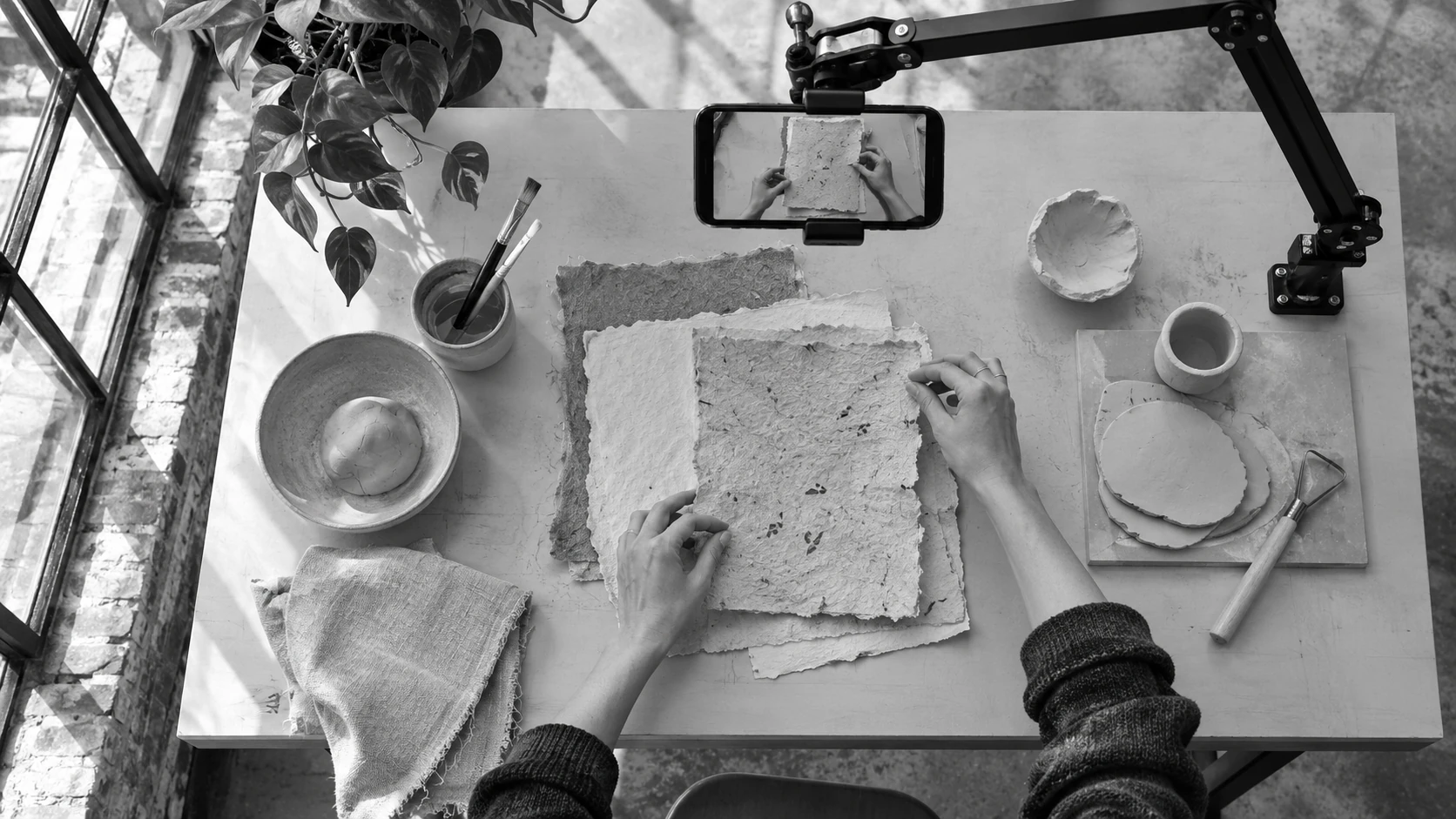
When the camera becomes the reason nothing gets published
Consider an illustrative situation: you have a useful idea, a clear desk and an afternoon to film. You spend the first hour adjusting your appearance, watching your own test clips and deciding that you will record tomorrow. The problem is no longer whether the idea helps someone. The production format has become a barrier. A faceless approach changes that choice. You can put the action in the frame and let the explanation do the work, while choosing a level of personal exposure you are comfortable maintaining.
This is a format decision, not a promise that anonymity creates easy growth. An audience still needs a recognizable subject, accurate information and an intelligible sequence. A collection of unrelated attractive clips does not become useful simply because no face appears. The ten formats below are editorial options to test against your actual skills and surroundings. Pick one that lets you show something you understand rather than outsourcing your point of view to generic images.
10 practical moves to try
Overhead hands-at-work tutorial
Show one complete hand task from a stable overhead angle: arranging a workspace, folding a sheet or preparing a sketch. Begin with the finished outcome, then show the few movements that make it possible. Keep your sleeves and hand position consistent so viewers can follow the change. Record a wider safety shot as well as a detail. The benefit is a tutorial that remains understandable even when your face never enters the frame.
Narrated screen walk-through
Use a screen recording to explain a decision rather than simply moving a cursor through menus. Show the starting problem, pause at the choice that matters and explain why you made it. Remove account details, notifications and unrelated tabs before recording. A short demonstration of organizing a content board can be more useful than a tour of every feature. Your reasoning supplies the personality, and the viewer leaves with a process they can repeat.
Point-of-view problem-solving
Let the audience see the situation from your position. A crowded work surface, a difficult camera angle or an awkward walking route can become the opening problem. Move through the decision in a clear sequence and return to the same view for the outcome. Do not use movement merely to make the shot energetic. A point of view becomes interesting when the viewer can understand what you noticed and why you changed your approach.
Before-and-after with the same framing
Choose a change you can show honestly, such as simplifying a shelf arrangement or correcting a cluttered composition. Keep camera position, light and scale reasonably consistent so editing does not manufacture the difference. Explain the action that caused the change. If several things changed at once, say so. This format gives the viewer a clear visual destination while making the practical method more important than a dramatic reveal.
A small process documentary
Follow a real task through its imperfect middle: setting up a small shoot, making a paper model or preparing a workshop corner. Capture preparation, one obstacle and the adjustment. A process documentary does not need a grand achievement to have a story. The useful part may be the decision that prevented a mistake. A viewer can recognize your standards through the work, even when the person doing it stays behind the lens.
Annotated sketch or paper explanation
Draw a simple route, sequence or comparison by hand while explaining it. Plan only the essential marks so the drawing does not become a separate performance. Use a dark pen on a plain surface and leave space for your hand. For a marketing idea, cards representing audience, message and next action can make an abstract relationship visible. Keep the explanation original and avoid presenting a sketch as measured data.
Original visual essay
Build a short argument from footage you created, such as why a quiet street feels different at opening time. Write one observation, then select only scenes that develop it. Add voiceover, environmental sound or restrained captions as needed. The essay needs a point of view, not merely cinematic clips and music. This gives camera-shy creators room to develop a recognizable perspective without making personal appearance the subject.
A question answered through objects
Use ordinary, unbranded materials to make a relationship visible. You might arrange blank cards to explain three possible content sequences or use paper shapes to show framing choices. Introduce the question before moving anything, then make one change at a time. This is especially useful when a talking explanation would become abstract. The objects are teaching aids, not product recommendations, and their role should remain obvious.
A location sound story
Record a small sequence built around sound: a workshop beginning work, footsteps entering a quiet passage or chairs being arranged before an event. Capture the source of the sound so the viewer can connect what they hear with what they see. Add only the context needed to understand the moment. Respect access restrictions and other people’s privacy. Sound can reveal atmosphere without making strangers’ faces the visual material.
A repeatable constraint challenge
Give yourself a useful limit: explain one idea using three shots, film a sequence without camera movement or show a change without voiceover. State the constraint and show the attempt. Discuss what worked and what remained unclear instead of declaring the experiment universally successful. A repeatable challenge can become a series because the audience understands the rules. The recognizable format reduces the need to invent an entirely new production style every week.
Find the format your evidence can support
A faceless format becomes distinctive through the choices you explain, not the absence of a face.
Choose by what the viewer needs to see
Write the sentence “After watching, someone can…” and finish it with an observable action. A creator explaining a folding technique needs visible hand movements. Someone explaining a planning method may need a clean screen capture or movable paper cards. A travel storyteller may need environmental sound and a sequence of decisions. Production should make that action easier to follow, not add equipment merely to make the shoot feel more professional.
YouTube’s filming guidance includes preparing a shot list. Use that principle to decide the evidence each format needs. Record a short test before committing to a recurring series: can someone who missed the shoot understand the setup, the action and the result? If the answer requires a long explanation from you afterward, the pictures are missing a step.
| What you can show | Start with | Check before filming |
|---|---|---|
| A repeatable hand skill | Overhead tutorial | Hands and tools stay visible |
| A digital decision | Narrated screen walk-through | Private details are hidden |
| A place or route | Point-of-view sequence | The route has a clear question |
| A personal observation | Visual essay with original footage | Pictures support the actual argument |
Practical questions
Do I need to hide my identity to make faceless content?
No. Faceless describes the framing, not a requirement to conceal who you are. You can use your name, voice and professional point of view while choosing not to film your face. Decide what personal details you are comfortable sharing and check the frame for addresses, notifications or private documents. A consistent choice is easier to maintain than changing boundaries during every shoot.
Can faceless videos work without voiceover?
They can, when the sequence explains the action clearly. Test the video without audio and ask whether a new viewer can identify the problem, follow the important steps and recognize the result. Add concise captions only where the pictures cannot carry the information. Music alone cannot explain a missing action or an ambiguous comparison.
Which format should I try first?
Choose the smallest format for which you already have knowledge, access and visible evidence. A complete hand task or a screen-based decision is often easier to test than a broad lifestyle montage. Film one version, show it to someone who was not there and ask what they learned. Use that feedback to refine the explanation before building a large series.
Turn this opportunity into a working brief
Review the points below and download a brief for your team. Your notes stay in this browser.
Sources and editorial context
The format ideas are original editorial exercises for creator work. Platform and production sources support limited filming principles, not claims of guaranteed reach or a ranked list of formats.