
Korean Cafés and Local Shops: How Do You Earn a Place on a Visitor’s Itinerary?
Make your Korean café or local shop easier for international visitors to discover, understand and visit with useful stories, route information and clear details.
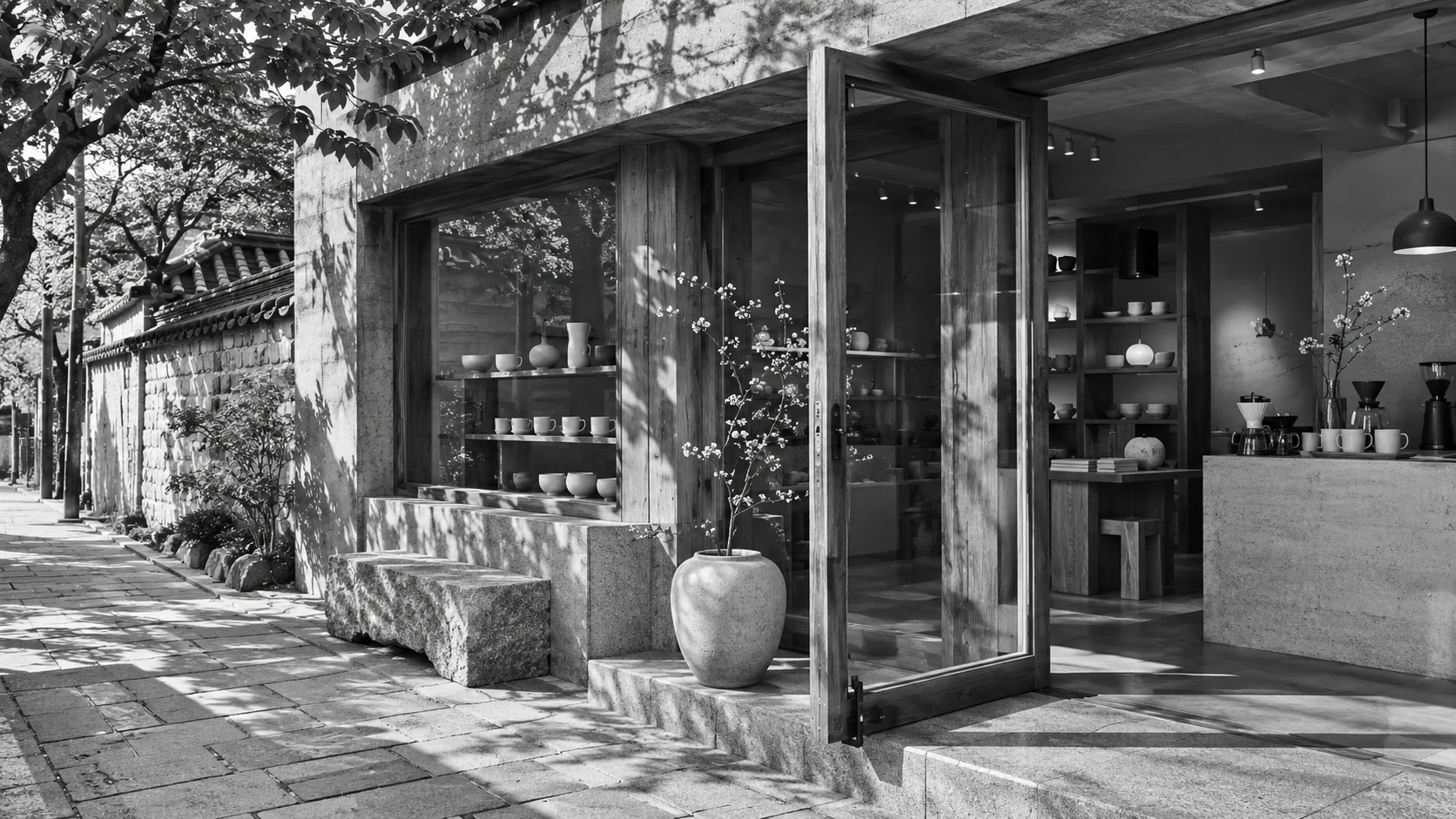
Make one detour-worthy reason visible
A visitor has a fixed number of meals, coffee stops and shopping hours. Tell them what makes this stop different without claiming to be the best café or most popular shop in Korea. It may be a small ceramic collection by local makers, a view from a restored building, an in-house preparation process or a rotating edit of independent labels. Explain the distinction through a sequence: an object, the person or process behind it and the moment a customer encounters it. The actual reason must survive after the camera leaves.
Seoul’s first-half 2026 visitor spending report shows that shopping and dining are meaningful parts of the visitor economy. It does not establish that a specific neighborhood or product is a trend. Use that context to ask a practical editorial question: which part of your business is interesting enough to become a stop, rather than a substitute for a stop visitors already planned? Show that answer honestly. A distinctive story is stronger when it is specific enough for someone to decide it is not for them.
From saved post to real stop
Every visually attractive discovery post needs a practical route into the business.
Design the saved post as a miniature visit plan
A post saved for later should remain useful when the traveler is standing on the street. Include a searchable Korean name, the address and a clear entrance image. State the normal opening schedule and where to check changes. For a café, explain ordering, seating or reservation arrangements if they differ from a visitor’s likely expectations. For a retailer, show the kinds of products stocked and whether appointments are required. Avoid hiding basic visiting information in an old story highlight that staff cannot keep current.
Use a neighborhood route only when it is realistic and respectful. A nearby attraction can explain location, but do not imply a partnership or a permission to enter private spaces. Show the final turn and approximate walking context rather than making a universal travel-time promise. Clearly distinguish your own store from a wholesaler, showroom or temporary pop-up. If a campaign features a limited collection, give it a date range and a fallback reason to visit after that range ends. Otherwise saved content becomes a source of disappointment. A current KTO regional itinerary feature presents connected stops; use that as a planning model, not proof of demand for your location.
| Visitor moment | Content to provide | Operational owner |
|---|---|---|
| Saving a possible stop | One distinctive reason and neighborhood context | Content lead |
| Finding the shop | Korean name, entrance image and map link | Store manager |
| Choosing what to buy | Current range, price context and stock caveat | Merchandising lead |
| Planning around a pop-up | Exact run dates and current updates | Event owner |
Brief creators around a visit, not a free advertisement
Invite the creator to answer a concrete visitor question: what would I do here, what should I notice and how does this fit into a day? A shop film might follow one object from display to use. A café story might show the preparation and the setting without pretending every visitor gets an empty room at peak time. Agree filming windows with the team and protect other customers. Do not make operationally impossible promises merely because a staged scene looks good.
Ask for a practical companion asset that the business can reuse within the agreed rights: an entrance clip, a simple visit guide or a carousel about the current range. Specify the use, duration and platforms of those rights rather than assuming a paid post transfers ownership of all footage. Give the creator factual information and room for an honest perspective. A comment asking where the café is can become a route update; a comment asking whether an item ships abroad belongs to product information, not another cinematic reel.
Connect the visit to an ongoing relationship
When a visitor discovers a product in Korea, the relationship does not have to end at the register. Provide a clear way to find the maker or collection again. If the business genuinely supports international delivery, explain the supported markets and current process on the relevant page. If it does not, avoid making an implied worldwide shipping promise. An opt-in collection update or a useful care guide can be a more realistic next step. Keep any customer information collection clear and voluntary.
Judge the campaign with several signals rather than treating every view as a visit. Review directions clicks where available, the questions customers ask, use of a campaign-specific offer and sales the business can actually associate with it. Ask frontline staff what visitors expected when they arrived. A creator story can be popular while sending people who want a product no longer stocked. Keep an update routine for the content and maps so your next visitor encounters the living business, not a frozen version of last season.
Practical questions
Should we call our café a hidden gem?
A specific reason to visit is more useful than a label many businesses use. Show the preparation, collection, setting or neighborhood relationship that makes the stop distinctive. Let guests decide whether it is a discovery for them instead of relying on an unsupported popularity claim.
Do international visitors need every detail in English?
Prioritize accurate information for the markets you can serve. An English visit guide can be a practical starting point, but useful Korean names and addresses remain important for finding the place. Add languages when you can maintain current facts and answer the resulting visitor needs.
How do we know whether a creator post brought people in?
Use available referral signals and a consistent staff question, while recognizing the limits. A dedicated link or offer can identify some actions but will not capture every visit. Report confirmed uses separately from estimates and avoid presenting view counts as verified foot traffic.
Turn this opportunity into a working brief
Review the points below and download a brief for your team. Your notes stay in this browser.
Sources and editorial context
Primary sources checked November 4, 2026. Sector observations are dated; frameworks and recommended tests are C3i3 Korea editorial analysis, not measured query popularity or promised results.