
Korean Body Care Brands: Which Content Helps a Lesser-Known Category Stand Out?
Give Korean body care a distinct content story through texture, packaging and everyday use, with practical ideas for creators, retailers and global product pages.
Make the category understandable before making it desirable
An unfamiliar body-care format asks the buyer to do extra work. They may recognize the bottle but not the difference between a wash, polish, lotion or other format in the range. The first useful content explains what the product is and where it belongs. Avoid borrowing the vocabulary of an elaborate facial routine if the product’s advantage is actually convenience. A clear category description gives the more artistic imagery something concrete to support.
For this article, body care is an editorial opportunity to investigate, not a claim that it is the fastest-growing Korean category. A brand should validate its own audience through retailer conversations, customer questions and content tests. Ask what people misunderstand before asking which visual trend to copy. If the product looks like a facial item, show scale and context. If the pack is designed for a shared bathroom, demonstrate handling without implying suitability for everyone. The category becomes memorable when the buyer can explain the difference to someone else.
Make the invisible product experience clearer
A sensory story becomes useful when it answers a concrete shopping or assortment question.
Build a sensory brief that a camera can actually deliver
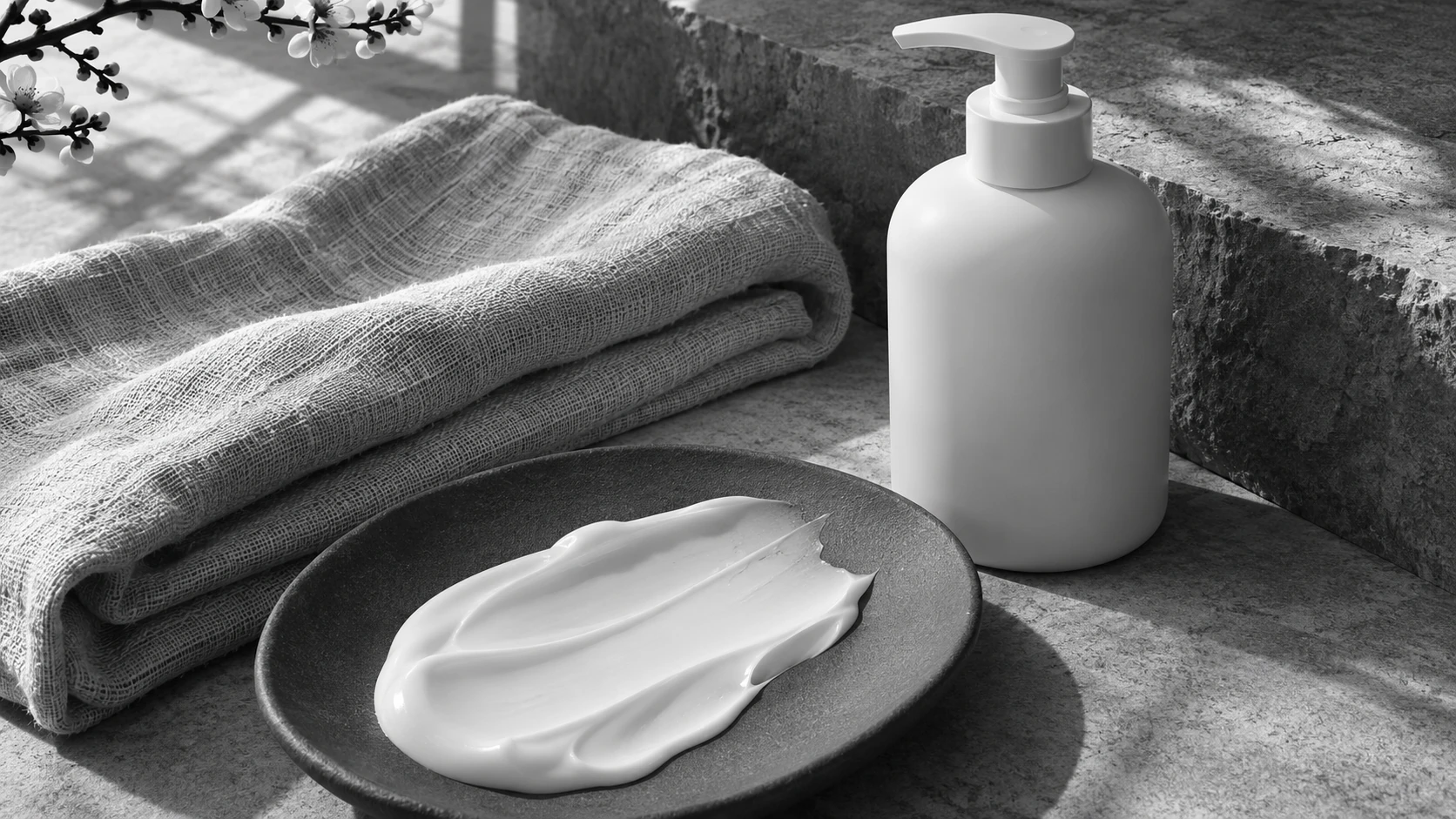
Video cannot transmit scent or touch directly, but it can reduce the guesswork around them. Show how a texture moves, how a cap opens and how the pack sits in a hand. When describing fragrance, give the creator the brand’s approved notes and room to explain their own impression accurately. Do not ask every participant to repeat the same adjective. Different honest descriptions can reveal which words need clarification on the product page.
Plan a few deliberate shots rather than filling the frame with unrelated props. A wide bathroom or dressing-area scene establishes context; a controlled close-up explains the product; a simple size reference answers storage questions. Keep lighting consistent across texture footage so the edit does not invent a different finish. If a sensory statement is presented as a general product claim, check its evidence and wording. Ireland’s claims guidance makes clear that cosmetic advertising extends beyond the pack to social materials. Attractive imagery still communicates a promise, even when the caption is short.
| What the buyer cannot experience online | Content cue | What to avoid |
|---|---|---|
| Texture | Controlled close-up of movement | An edited finish presented as a real result |
| Scent | Approved notes and honest impressions | Identical scripted reactions |
| Scale | Bottle in a hand or on a shelf | A floating pack with no reference |
| Routine fit | One recognizable use occasion | A complicated invented ritual |
Give retailers a different story from shoppers
A shopper may want to know how a product feels. A retail buyer also needs to understand why it belongs in the assortment, how the range is organized and whether the business can support the offer. Build a concise trade page with format, pack size, available market materials and a clear inquiry path. Keep consumer-facing emotion, but make the commercial details easy to find. A beautiful brand film is not a substitute for an understandable range sheet.
Choose a small entry assortment that tells a coherent story. If three products share one use occasion, explain their different roles without implying that every customer needs all three. For a destination retailer, the Korean design or material story may help the product fit the space; for a specialist shop, routine clarity may matter more. Treat these as propositions to discuss with buyers. Record their objections, then revise the trade material. The most useful early signal is a precise follow-up question about fit or supply, not a polite compliment on the packaging.
Use small creative tests to find a distinctive lane
Compare two explanations of the same product before changing the product, creator and channel at once. One version might emphasize handling and convenience; another might explore the everyday atmosphere around the routine. Keep the offer and destination page stable enough to learn from the difference. The question is which explanation creates relevant curiosity, not which video produces the largest number in isolation.
Capture the words people use when they ask for more information. Those phrases can shape future guides, subtitles and retailer FAQs. Preserve the difference between an observation and a conclusion: a few comments about scent are feedback, not proof of market preference. When the material attracts the right type of question, build the next asset around that need. C3i3 Korea can discuss how to connect a product story with creator, content and campaign work. Bring the actual format, audience and distribution situation so the conversation starts with a real opportunity rather than a generic promise to go viral.
Practical questions
Should Korean body care use the same creative as facial skincare?
Only where the buying questions are genuinely shared. Body products often need clearer scale, dispensing and use-context information. Start from the format and audience rather than copying a facial serum campaign.
Can fragrance be explained without exaggerated language?
Yes. Combine accurate brand notes with an honest personal impression and context. Avoid declaring that everyone will love it or treating a subjective reaction as a universal result.
What should a retailer-focused body care page include?
Explain the range, product formats, relevant market materials and how to inquire about the opportunity. Make operational details accessible and distinguish confirmed availability from markets the brand is still exploring.
Turn this opportunity into a working brief
Review the points below and download a brief for your team. Your notes stay in this browser.
Sources and editorial context
Reviewed November 4, 2026. Dated primary sources support limited context. Campaign frameworks and niche recommendations are original editorial analysis, not measured keyword popularity or guaranteed performance.