
Los Angeles Korean Fashion Wholesale: How Do You Turn Showroom Interest into Buyer Inquiries?
Connect LA fashion showroom interest with useful buyer inquiries through clear collections, line sheets, visit information and trade qualification.
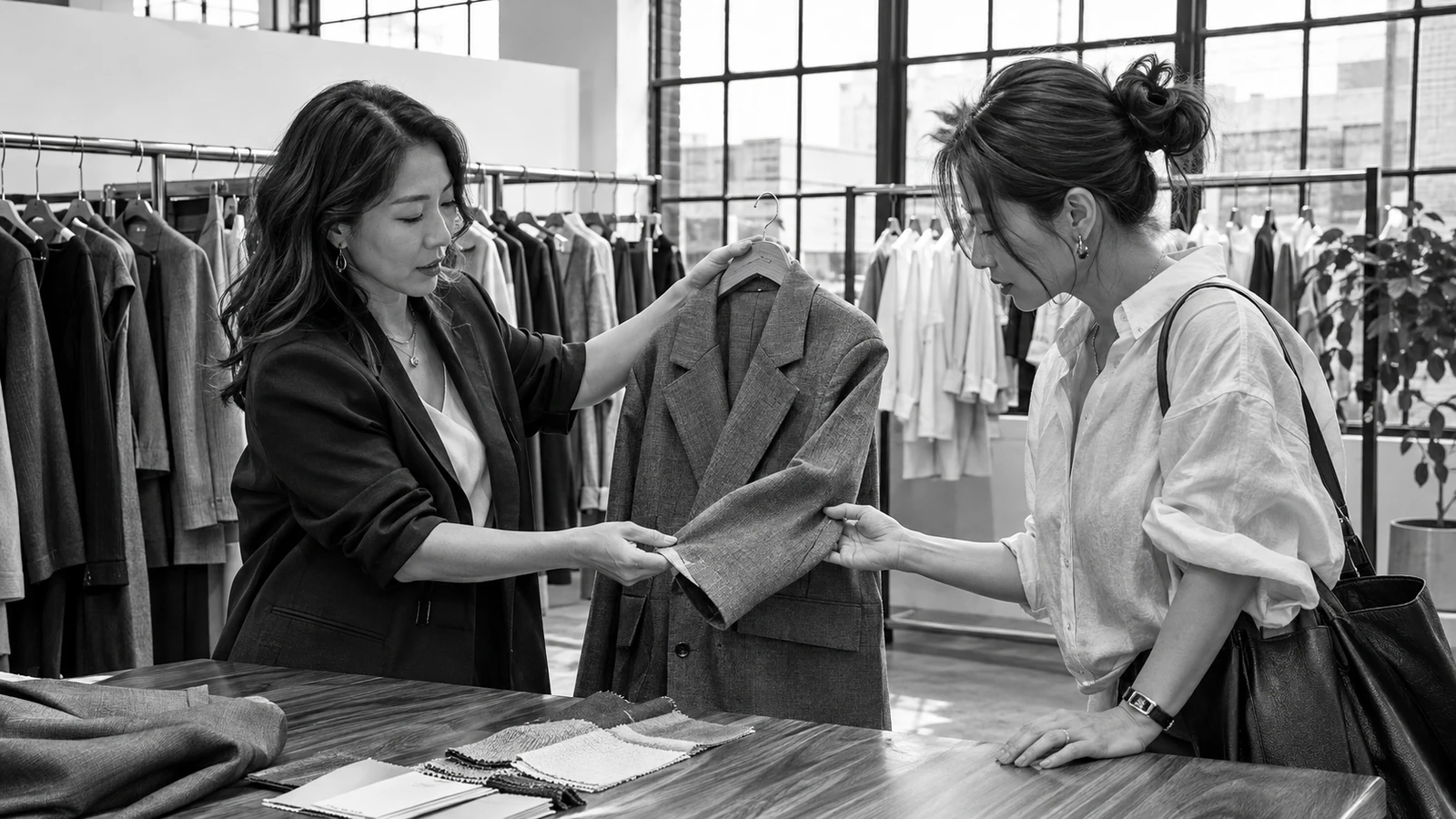
What does a fashion buyer need after seeing your collection?
A strong image creates interest, but a buyer still needs to decide whether the line fits their store. Explain the category, intended customer, relevant season or release window and the commercial next step. Keep the description specific enough to help a retailer choose a conversation rather than simply admire a photograph.
Distinguish new account inquiries from existing buyer access and public shopping, if you offer it. A wholesale showroom should not leave visitors guessing whether a pictured item is a sample, available stock or a future delivery. These distinctions matter more than adding a long list of fashion keywords.
From collection interest to buyer review
- 01Recognize the collectionKeep style references consistent across images and files
- 02Check style and pack contextShow actual visit and appointment arrangements
- 03Request the right conversationCapture collection context with the inquiry
- 04Confirm the next step with the teamSeparate requests from confirmed bookings and orders
Keep style references consistent across images and files. Separate requests from confirmed bookings and orders.
How should you explain showroom access in Los Angeles?
Publish the real address, suite or building information where relevant, your own visit instructions and whether an appointment is needed. The LA Fashion District's buyer guidance recommends contacting individual showrooms for appointments outside Market Weeks. Do not treat a district-wide guide as a substitute for confirming your own schedule.
Make the difference between an appointment request and a confirmed visit unmistakable. A form can collect preferred dates and the collections of interest, but the team should confirm availability. Explain any trade-account checks through your actual process; avoid suggesting that every business in Los Angeles applies identical access requirements.
Which collection details make a line sheet useful?
Give buyers a consistent reference for each style, then connect that reference to images, sizes, colors, pack arrangements and the current availability status you can verify. If a color is photographed under creative lighting, include a practical way to resolve uncertainty before order acceptance.
Keep a current version identifier on the line sheet. A beautiful file becomes a problem when a rep and a buyer are discussing different editions. Provide a contact or request route tied to the collection so the sales team knows which material the buyer viewed. Remove superseded documents from active website links without pretending that previously distributed copies disappear.
What should a showroom inquiry ask?
Ask for the store or business, buying category, selected collection or style references and the preferred type of conversation. A first visit, a sample review and a reorder should not all require the same fields. Keep the form short enough for a buyer working from a phone.
The decision table is a planning example. Use the information to route the inquiry and identify missing context, not to approve credit or stock automatically. A buyer who does not know an exact style yet may still be a useful prospect.
| Buyer situation | Useful detail | Next review |
|---|---|---|
| First collection visit | Store type and collection interest | Visit availability and account fit |
| Specific style evaluation | Style reference and size needs | Pack and availability review |
| Returning buyer request | Account and prior order reference | Current terms and reorder path |
How do you preserve the context of a buyer conversation?
Save the collection, source page and buyer's stated request alongside the contact record. Keep the original request distinct from notes added by the sales team. That gives the next person a reliable starting point without forcing the buyer to repeat every detail.
Illustrative scenario: a fictional Korean-owned LA showroom shares a release preview with a retailer. The retailer requests an appointment for two categories, and the team receives those references with the requested dates. A person checks the schedule and responds. No booking, price or allocation is confirmed merely because the form was submitted.
How do you find a Korean-American marketing partner for fashion wholesale?
Ask how the proposal connects photography, collection information, search pages and buyer qualification. A culturally informed team should understand bilingual trade terminology and your actual selling process without assuming every retailer is Korean-speaking or every garment is made in Korea.
C3i3 Korea's team can build around this buyer journey: distinctive content, understandable trade pages and a working inquiry handoff. Compare deliverables by their usefulness to sales. An organized collection, a clear visit route and a reliable lead record are more valuable foundations than a promise to dominate every local fashion search.
Practical questions
Should a showroom website say it is open to everyone?
Only if that is accurate. Explain your own trade access and appointment process. The district includes different business models, so buyers should not have to infer your rules from another showroom.
Can a campaign image replace a line sheet?
It can create interest, but it usually does not carry the references and ordering context a buyer needs. Connect the image to accurate collection information and a clear next step.
Should we use the same page for samples, wholesale and public retail?
A shared overview can explain the choices, but the actions should reflect the actual visitor's task. Separate terms and review steps where they differ so one path does not promise another path's conditions.
Turn this opportunity into a working brief
Review the points below and download a brief for your team. Your notes stay in this browser.
Sources and editorial context
Platform references support the specific facts discussed. Business scenarios are illustrative, not client results.